How the body works
Connect normal physiology through simple whole-body stories.
 MedSkoolers
A clearer way into medicine
We help medical students connect normal physiology, organ failure, clinical tools and disease—so facts have somewhere to belong.
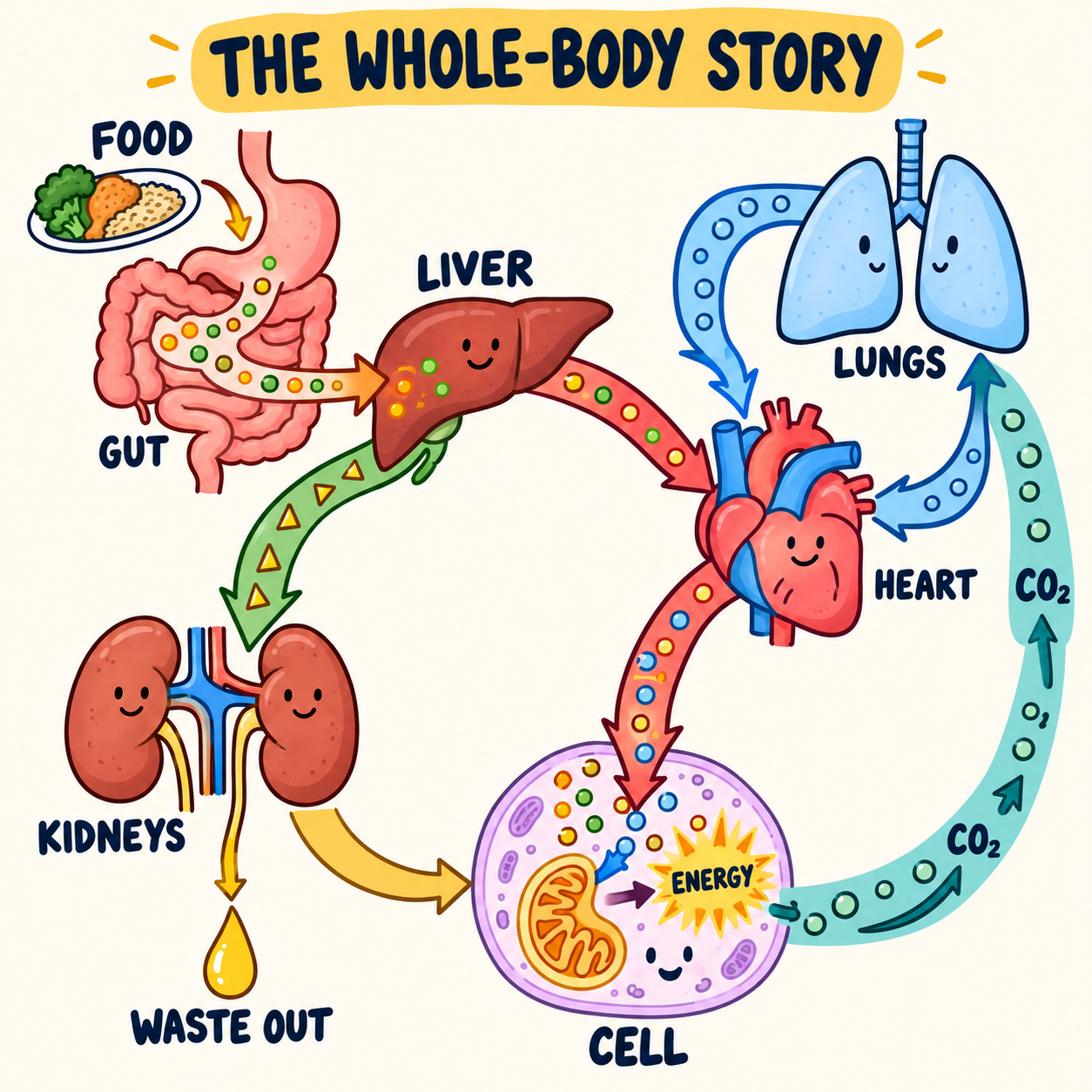
One body. One connected story.
Before the lists, build the map.
Medicine is difficult. It does not need to feel disconnected.
The MedSkoolers method
Layer Zero is a short preparatory journey—not a replacement for medical school. It helps you build the mental framework that conventional teaching can later fill.
Connect normal physiology through simple whole-body stories.
Move from causes to manifestations, investigations and treatment.
Build confidence with labs, ECG, imaging and pharmacology.
Approach important systemic conditions with an organised mind.
The eight-week journey
This is a short preparation phase before students return to conventional teaching with a stronger mental framework.
Energy, circulation, oxygen, metabolism, waste, immunity and endocrine control—told as connected whole-body stories.
Heart, lung, kidney and liver failure: normal function → causes → manifestations → investigations → treatment.
Use laboratory results, ECG, imaging and pharmacology to answer real clinical questions—not as isolated subjects.
Connect diabetes, hypertension, infection, autoimmunity and other major diseases across organs and cases.
Understand how the body works, recognise how its major organs fail, use essential clinical tools and approach the most important systemic diseases.
Internal Medicine first
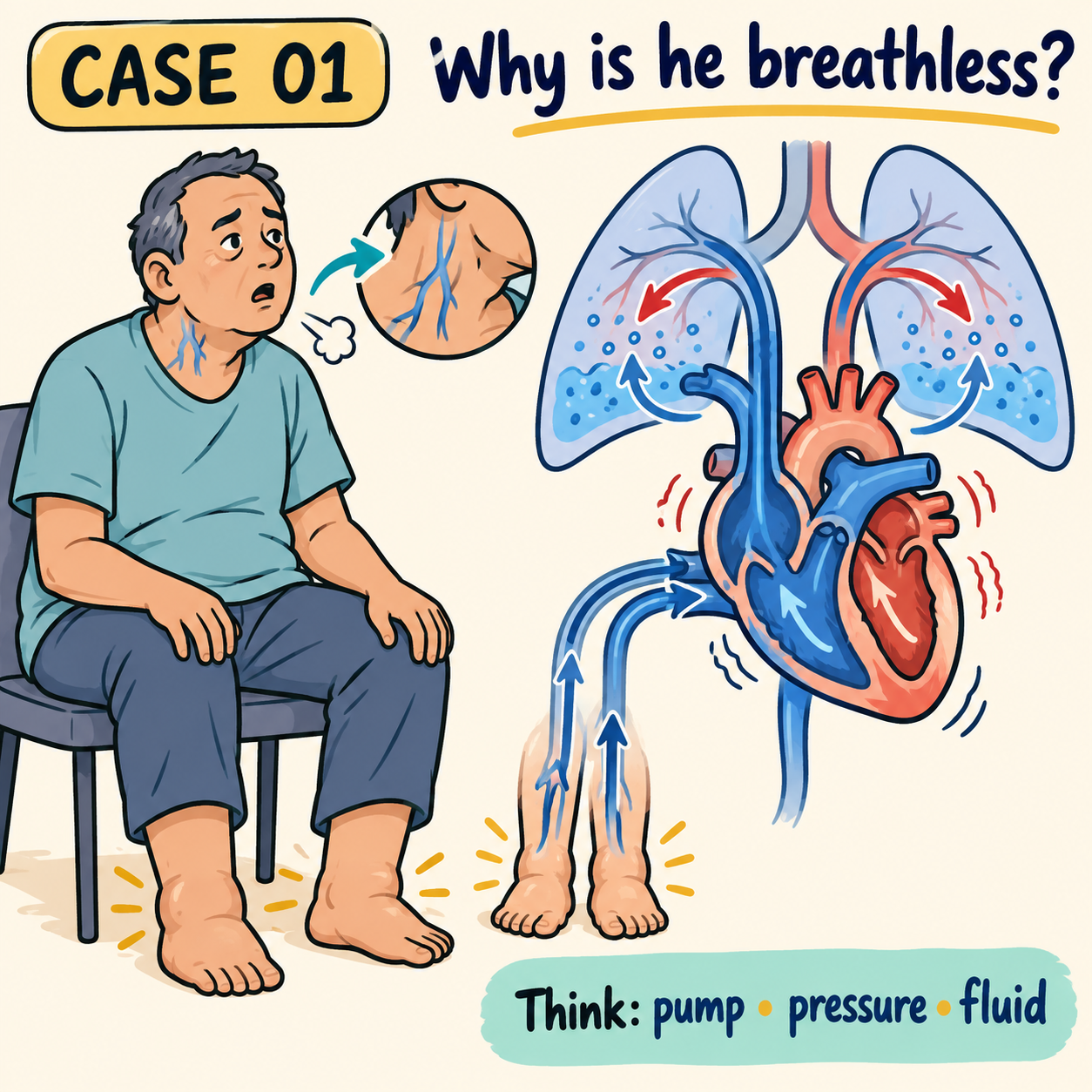
Begin with physiology, commit to an answer, then unpack the evidence one layer at a time.
Get the first case →Heart failure, ECG foundations, ischaemia and rhythm.
Gas exchange, respiratory failure and the breathless patient.
Filtration, electrolytes, acid–base and kidney failure.
Endocrine, gastro, neurology, infection, haematology and rheumatology.
Internal Medicine is chapter one. Other undergraduate specialties will follow, shaped with students and faculty.
Try the method
A 68-year-old patient has progressive breathlessness, orthopnoea, bilateral ankle swelling and fine basal crackles. Which finding would most strongly support heart failure?
Best-of-five · Sample 01
One foundation, many pathways
Our long-term exam guides will map core clinical knowledge to the style, priorities and practical steps of major licensing pathways around the world.
Exam-specific resources are being developed progressively. Always confirm current requirements with the relevant official examination body.
Built with the community
Discuss cases, ask faculty, practise best-of-five questions, earn bounties for valuable contributions and help us improve what we teach next.
Learn it. Explain it. Earn it.Membership opens when the learning experience is ready.
Be first to knowSimple membership
No founding memberships and no confusing free tier. We open paid membership when the essential experience is ready.
One simple membership
€9 / month
Stay for as long as MedSkoolers helps you learn.
Our launch promise
Future plans will be based on what genuinely serves students and sustains good teaching.
Students
Test lessons, suggest cases, explain concepts and compete for learning bounties.
Raise your hand →Faculty
Contribute a teaching pearl, review a case or join a focused discussion.
Collaborate with us →Questions students may ask
No. It is a preparation and reinforcement layer designed to make formal teaching easier to organise and remember.
An eight-week journey through connected physiology, major organ failure, essential clinical tools and important systemic diseases.
Medical students who want a clearer framework, especially before or during their Internal Medicine learning.
Yes, progressively. Exam guidance will support pathways such as USMLE, UKMLA/PLAB, MCCQE and others, while official exam bodies remain the final source of current requirements.
Whop is planned as the main paid learning home. Skool and social platforms will extend discovery and community presence without duplicating everything.
Follow MedSkoolers
One medical story, shared everywhere.
Cartoon explainers, clinical pearls, best-of-five questions and launch updates. The official profiles are being activated under the same MedSkoolers name.
Meta Business Suite will manage the Instagram and Facebook pages; it is an administration tool rather than a separate public profile. Whop remains the primary paid learning home at launch, while Skool gives MedSkoolers an additional community presence without duplicating the full programme.